US Tariffs Threaten India Solar Plans
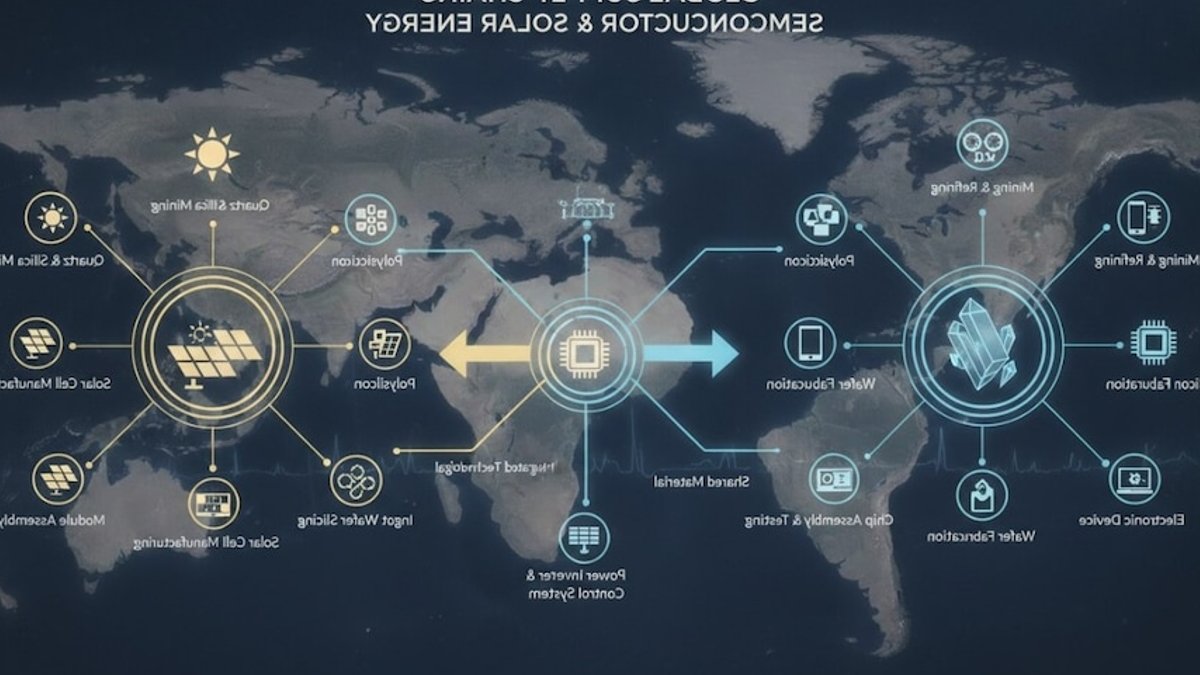
The US has introduced minimum import prices for polysilicon, silicon ingots, and wafers, along with a 15% tariff on specified downstream products, in a bid to strengthen its domestic semiconductor and solar supply chains. This move could disrupt global polysilicon trade flows, with excess Chinese supply potentially being redirected to non-US markets at lower prices.
Polysilicon Production
Polysilicon is one of the first building blocks in the silicon chip supply chain, and the global supply chain is heavily concentrated in China, which accounts for more than 90% of polysilicon production. The White House says global polysilicon production has increased more than 270% since 2020, with solar-grade material accounting for more than 97% of global production.
The US is trying to bring more of its semiconductor supply chain back home and is now extending that push upstream, seeking to build domestic capacity in polysilicon, ingots, and wafers. From December 4, the US will impose minimum import prices of $21 per kg on polysilicon and $100 per kg on polysilicon ingots and wafers.
Related: CareTech AI acquired by small cap company
Impact on India
India is entirely import-dependent and has no commercial polysilicon production capacity, which makes it vulnerable to disruptions in the global polysilicon trade. Dumping of polysilicon, ingots, or wafers in India could be a double-edged sword, potentially benefiting India’s solar and semiconductor ecosystem by giving upcoming foundries access to low-cost raw material.
However, cheap imports could also hurt India’s plans to establish greenfield wafer manufacturing, given the high capital expenditure and long payback periods. Danish Faruqui, CEO of Fab Economics, explains that greenfield wafer manufacturing is highly vulnerable to global dumping, and that building integrated ingot and wafer facilities requires heavy capital investments.
Arun Mampazhy, an independent semiconductor analyst, notes that India’s planned semiconductor fabs, including Tata Electronics’ $11-billion Dholera facility, will initially remain dependent on imported silicon wafers.
Related: Families urged to record final wishes
ISM 2.0 and Wafer Manufacturing
While ISM 2.0 aims to build a more complete semiconductor ecosystem in India, details of the scheme are yet to be released.
India’s semiconductor industry is still developing.

CareTech AI acquired by small cap company


