
“`html
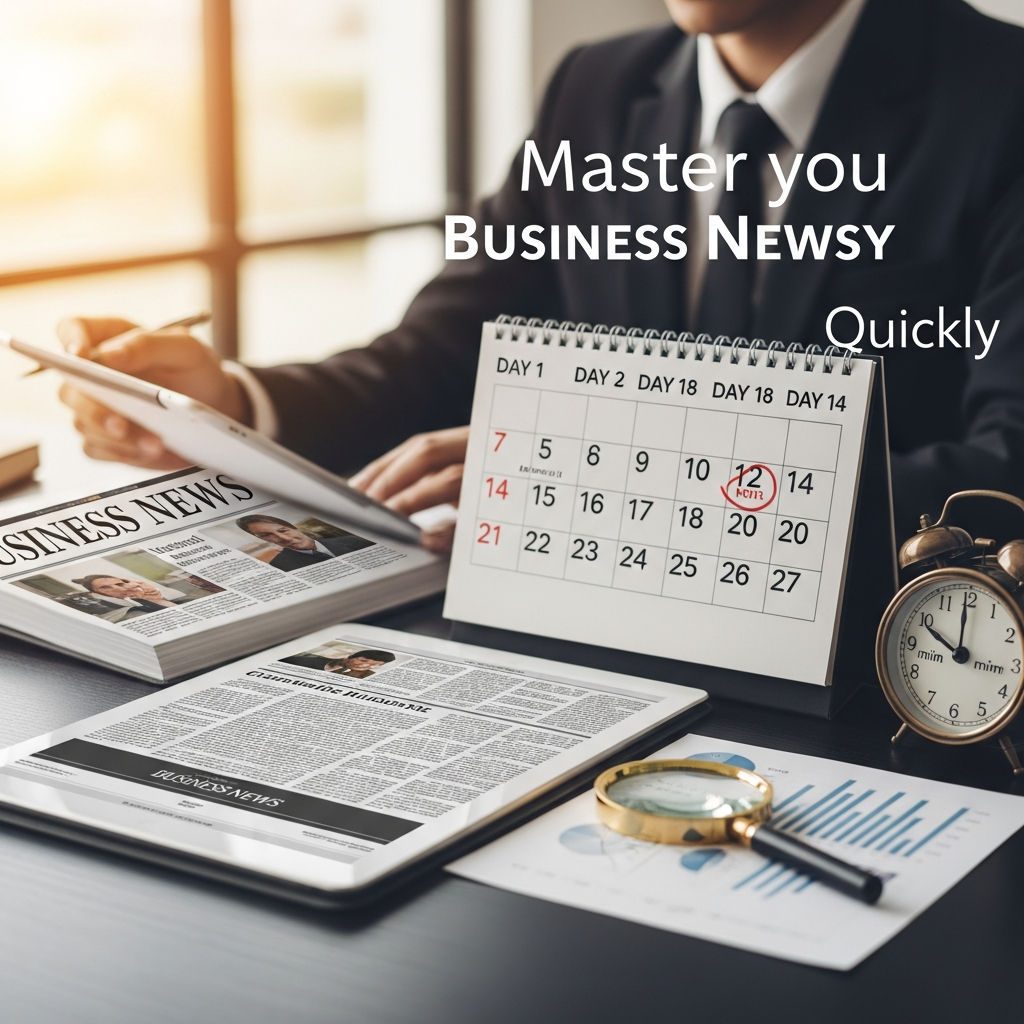
How to Master Business News in 14 Days: A Complete Roadmap
In today’s hyper-connected economy, being “informed” is no longer enough. To excel in your career, make smarter investments, or lead a company, you need to master business news. However, the sheer volume of data—from stock market fluctuations and interest rate hikes to AI breakthroughs and geopolitical shifts—can be overwhelming.
The good news? You don’t need an MBA to understand the Wall Street Journal or the Financial Times. You simply need a system. This guide provides a structured 14-day roadmap to transform you from a confused observer into a savvy business analyst.
Phase 1: Building Your Foundation (Days 1–4)
The first few days are about curating your information stream and learning the “language” of business. If you don’t understand the terminology, the news will always feel like a foreign film without subtitles.
Day 1: Curate Your “Tier 1” Sources
Not all news is created equal. Start by identifying high-signal, low-noise sources. Avoid clickbait and focus on publications known for rigorous reporting. On Day 1, set up accounts or bookmarks for the following:
- The “Big Three”: The Wall Street Journal, Financial Times, and Bloomberg. These are the gold standards for global trade and finance.
- Aggregators: Use tools like Feedly or Google News to categorize topics like “Tech,” “Energy,” or “Macroeconomics.”
- Newsletters: Subscribe to Morning Brew or Robinhood Sherpa for a digestible, conversational tone that helps bridge the gap for beginners.
Day 2: Master the Terminology
Business news is riddled with jargon. Spend Day 2 creating a “cheat sheet” for the most common terms you see. Focus on:
- Macro terms: Inflation (CPI), GDP, Interest Rates, and Quantitative Easing.
- Market terms: Bull vs. Bear markets, IPOs, Short Selling, and Market Cap.
- Corporate terms: Revenue vs. Profit, EBITDA, and Fiscal Year.
Day 3: Understanding the “Big Players”
Business doesn’t happen in a vacuum. You need to know who pulls the strings. Research the roles of the Federal Reserve (The Fed), the SEC, and major global entities like the ECB (European Central Bank). Understanding that Jerome Powell’s words can move trillions of dollars is key to contextualizing a headline.
Day 4: The Art of the Headline
Practice “triangulating” news. Take one major story (e.g., a tech company’s layoff) and read how three different outlets report it. Notice the nuances: Does one focus on the stock price? Does another focus on the human impact? Does the third focus on industry trends? This builds critical thinking.
Phase 2: Connecting the Dots (Days 5–9)
Once you know the “what,” you need to understand the “why.” This phase focuses on the relationship between different economic forces.
Day 5: The Macro-Micro Connection
Learn how global events affect individual companies. For example, if the price of crude oil rises (Macro), how does that affect an airline’s quarterly earnings (Micro)? Spend today tracing one global event down to its impact on a specific brand you use every day.
Day 6: Following the Yield Curve and Interest Rates
Interest rates are the “gravity” of the financial world. When rates go up, borrowing becomes expensive, and stock valuations often drop. Spend Day 6 watching a short video or reading an explainer on why the Federal Reserve changes rates and how it trickles down to your mortgage and your 401(k).
Day 7: Sector Deep Dive – Technology & Energy
The world runs on silicon and oil. Choose two major sectors and learn their current “narratives.” For Tech, it might be the race for Generative AI. For Energy, it might be the transition to renewables vs. fossil fuel security. Understanding sector narratives helps you predict future headlines.
Day 8: Reading an Earnings Report
Public companies must report their finances every three months. Find a “10-Q” or an earnings press release for a company like Apple or Amazon. Don’t worry about every number; look for the Guidance (what the company thinks will happen next) and the Year-over-Year (YoY) growth.
Day 9: The Role of Geopolitics
Business news is often political news. Learn how trade wars, Sanctions, or elections in foreign countries disrupt supply chains. Mapping out where your iPhone is made and where its chips come from will make “Supply Chain” news much more interesting.
Phase 3: Analysis and Application (Days 10–14)
In the final stage, you move from consuming news to analyzing it like a pro.
Day 10: Using Multimedia Tools
Sometimes, reading isn’t enough. Incorporate high-quality podcasts and videos into your routine. Shows like The Journal (WSJ) or Bloomberg Surveillance provide expert commentary that adds color to dry statistics. Listen during your commute to immerse yourself in the “business dialect.”
Day 11: Identifying “Market Sentiment”
Markets are driven by two emotions: Fear and Greed. Learn about the VIX (Volatility Index), often called the “Fear Gauge.” On Day 11, try to determine if the current market mood is optimistic or pessimistic based on the headlines. Is the news focusing on “record highs” or “impending recession”?
Day 12: Fact-Checking and Avoiding Bias
Every publication has a lean. Spend today identifying bias. Is a source overly “pumping” a certain stock? Is the reporting overly catastrophic? A master of business news looks for objective data (numbers, dates, official statements) over sensationalist adjectives.
Day 13: Developing Your Own Thesis
Pick a current business trend (e.g., the rise of Remote Work) and write three bullet points on how you think it will evolve over the next year. This forces you to move from a passive reader to an active thinker. Check your “thesis” against expert opinions later that day.
Day 14: Establishing the Permanent Routine
Mastery is a habit, not a destination. On your final day, finalize a 20-minute daily routine. A sample “Pro Routine” looks like this:
- 0–5 mins: Scan the “What’s News” section of the WSJ or Bloomberg.
- 5–15 mins: Read one “Long-form” deep dive into a specific industry.
- 15–20 mins: Listen to a business news briefing podcast.
Why Mastering Business News Matters
When you master business news, you stop reacting to the world and start anticipating it. You’ll understand why your company is pivoting, why your grocery bill is rising, and where the next big economic opportunity lies. Whether you are an entrepreneur, an employee, or an investor, the “financial literacy” gained in these 14 days is an asset that pays dividends for a lifetime.
Common Pitfalls to Avoid
As you embark on this 14-day journey, keep these three warnings in mind:
- Avoid “The Noise”: Don’t get bogged down in minute-by-minute stock price movements. Focus on the trends, not the ticks.
- Don’t Be Afraid to Google: If you see a term you don’t know, look it up immediately. Business knowledge is cumulative.
- Diversity Your Input: Don’t just read news from your own country. Global markets are interconnected; a “shadow banking” crisis in China can affect tech stocks in California.
Conclusion
Mastering business news in 14 days is about building a muscle. In the first week, it might feel heavy and confusing. By the second week, the patterns begin to emerge. By day 14, you will find yourself contributing to high-level conversations and making more informed financial decisions. Start Day 1 today—the global economy isn’t waiting.
“`